
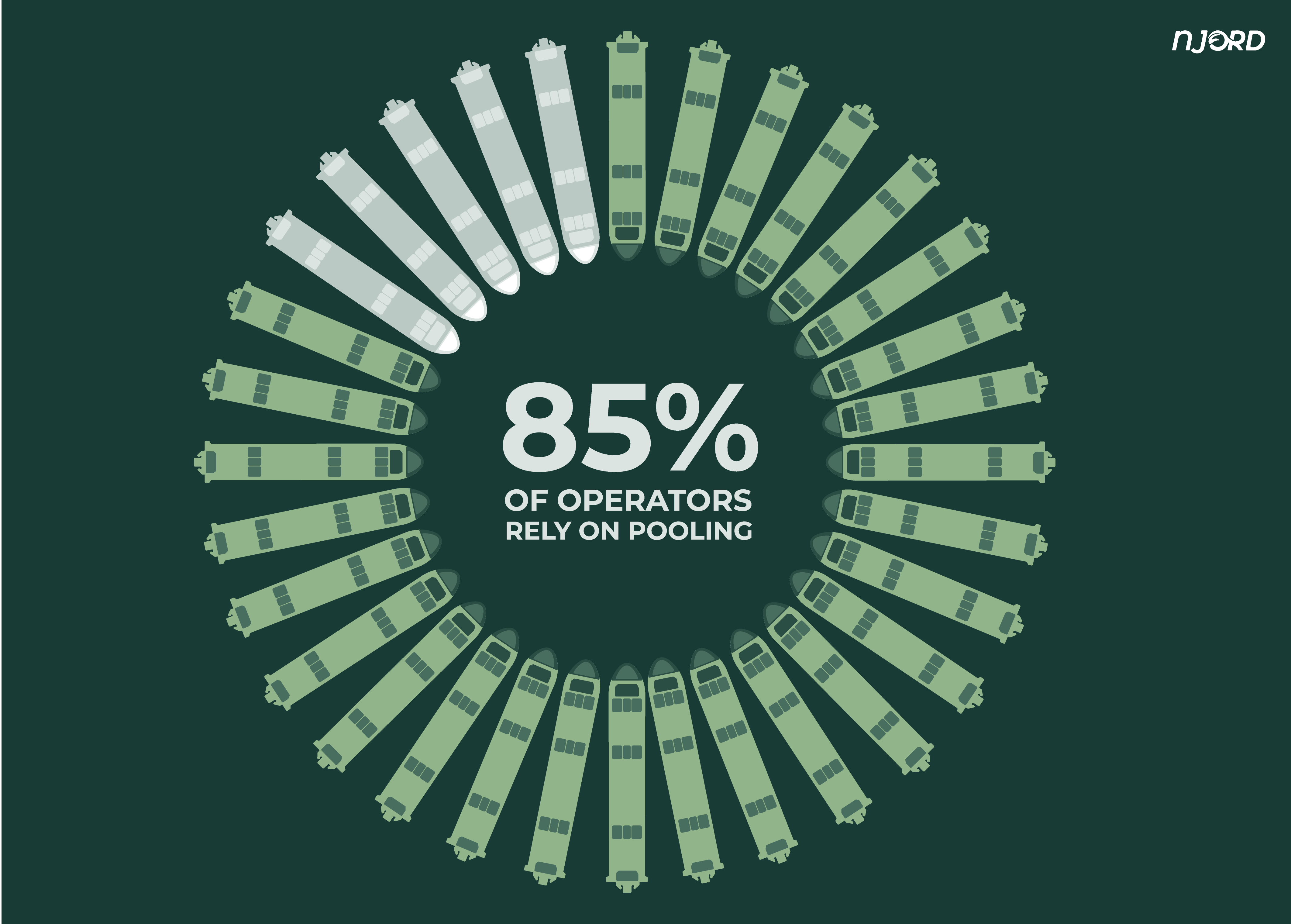
As the first FuelEU Maritime compliance year progresses, pooling is emerging as one of the most important mechanisms available to shipowners and operators seeking cost-effective compliance.
The regulation requires vessels calling at EU ports to progressively reduce the greenhouse gas intensity of the energy used on board. While operators can invest in efficiency technologies, adopt lower-carbon fuels, or accept a compliance deficit and pay penalties, FuelEU pooling introduces a fourth and increasingly attractive option: sharing compliance balances across vessels.
In practice, vessels with a compliance surplus can transfer that surplus to vessels with a deficit, creating a market-based mechanism that rewards early movers and provides flexibility for operators facing short-term compliance challenges.
Compliance Pathways
For most operators, FuelEU compliance can be achieved through a combination of:
- Operational efficiency improvements
- Energy efficiency technologies
- Adoption of renewable and low-carbon fuels
- Pooling of compliance surpluses
- Payment of FuelEU penalties where necessary
The attractiveness of each option depends on vessel type, trading pattern, fuel availability and commercial considerations. However, pooling is rapidly becoming a preferred solution because it can deliver compliance at a significantly lower cost than penalties while avoiding the operational complexity associated with alternative fuels.
The Growing Importance of Market Transparency
As with any emerging market, transparency remains a challenge.
Unlike established commodity markets, FuelEU surplus transactions are often conducted bilaterally, making it difficult for buyers to assess fair market value.
In our experience, surplus often changes hands multiple times before reaching the final compliance buyer. A surplus generated by one operator may be acquired by an intermediary, resold through a broker, and ultimately offered through another market participant. Each additional layer typically introduces a margin, increasing the final price paid by the deficit holder.
In a rapidly developing market, limited visibility can make it difficult to determine whether the quoted surplus value reflects the underlying market or the number of intermediaries involved.
For buyers, access to the original surplus source, strong counterparty due diligence and transparent pricing mechanisms are therefore becoming increasingly important considerations.
Looking Ahead
Pooling has established itself as a valuable compliance mechanism under FuelEU Maritime and will likely remain a key part of many operators' decarbonisation strategies. As the market matures, we expect transparency, liquidity and direct access to surplus providers to become just as important as the surplus itself.
Pooling will remain central to FuelEU compliance strategies. As the market matures, transparency, traceability, and efficient access to surplus capacity will increasingly define true compliance cost.

Related articles


.svg)

