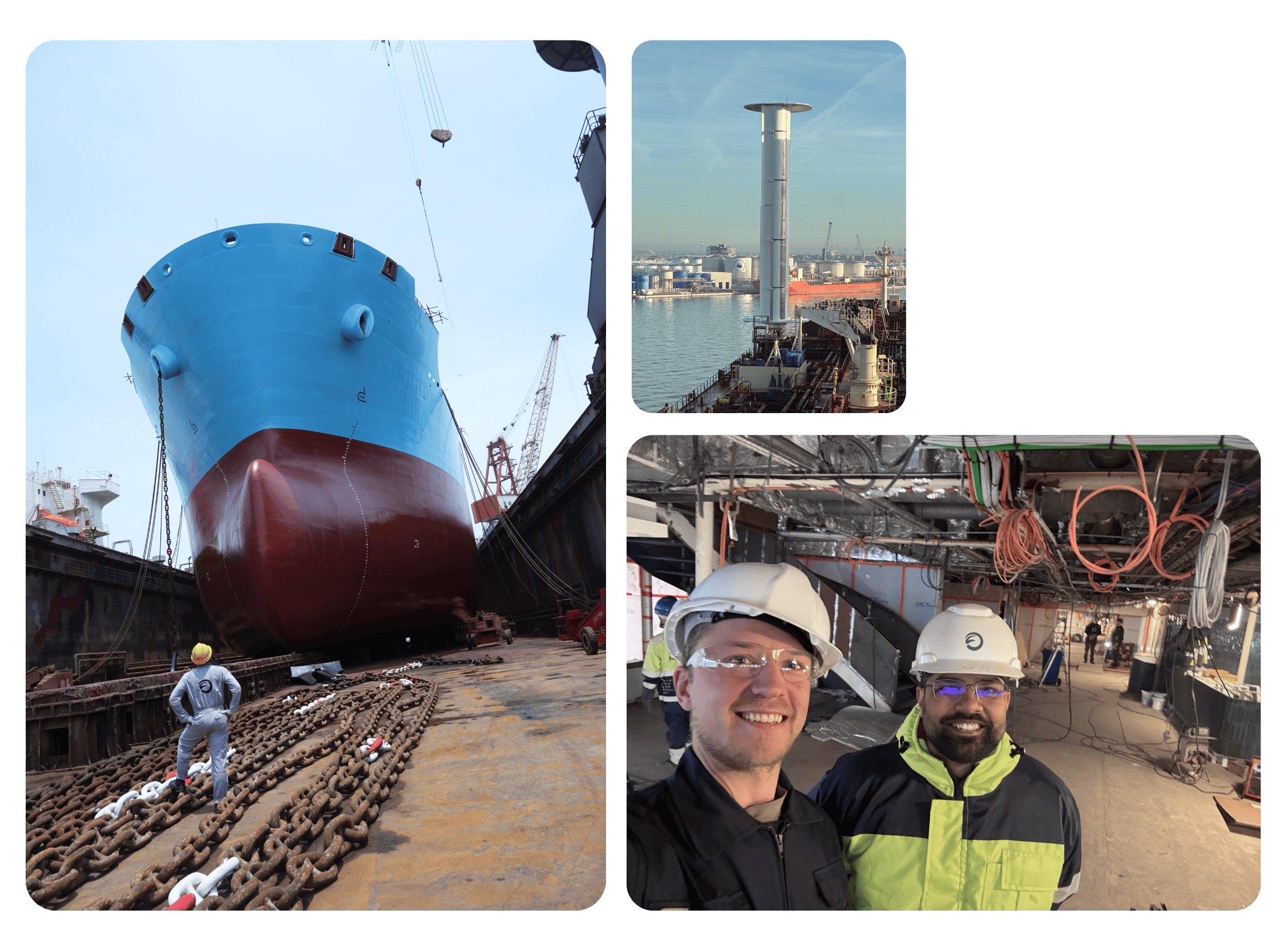
Installing new technology on an existing vessel involves more than the equipment itself. From adapting drawings to coordinating specialists and testing connections, much of the work happens in the details. Here's what that looks like on site.
A retrofit involves bringing together new equipment, existing vessel systems and several teams working to a tight schedule. Once installation begins, drawings have to be reconciled with the reality of the vessel, suppliers need to arrive at the right time, and every connection must be checked before commissioning. With drydock time at a premium, managing these details is essential to keeping the project on track.
The drawings are the starting point
Even with detailed engineering drawings, adjustments are inevitable when installing new technology on an existing vessel. Cable routes may conflict with existing pipework, available space may differ from the original layout, or delivered equipment may require changes to the planned connections.
When this happens, Njord's site team documents the deviation with photographs, marked-up drawings and a proposed solution. Our technical team reviews the change against the cable schedule and system architecture, identifies any affected connections and updates the drawings where needed.
Resolving these questions on site helps keep the installation moving while ensuring changes remain consistent with the overall system design.
Small details make a difference later
A single wind propulsion unit can involve high-voltage power feeds, fieldbus and signal cables, optical fibre, emergency stop circuits, lighting and grounding. Each connection must be terminated, labelled and earthed according to the manufacturer's specifications, with cable runs secured and penetrations sealed to the required standard.
These tasks may seem routine, but small oversights can create significant troubleshooting challenges later. A missing cable label or a poorly secured connection can make faults harder to identify, particularly when the vessel is already at sea. Getting these details right during installation helps reduce avoidable issues and simplifies future maintenance.
Testing before commissioning
Completing the physical installation is only part of the process. Before commissioning, connections need to be tested to verify that systems are ready to operate. Depending on the installation, this includes insulation resistance tests on power cables, checking that the correct supply reaches each load, testing industrial network cables with an analyser and verifying optical fibre links.
During recent installations, electrical checks identified incorrect wiring on a lighting circuit, while network testing revealed an incorrectly installed vessel internet cable. Inspections also identified power cables that needed additional securing.
Addressing these issues while the installation team is still on site helps avoid more complicated troubleshooting later, when access may be limited and specialist support harder to arrange.
Coordinating specialists around the vessel's schedule
Not all integration work can be completed in drydock. Connecting new radars and cameras with existing navigation equipment, such as the echo sounder and speed log, may require the vessel to be afloat and the technology provider's specialists to attend for final commissioning.
This makes sequencing particularly important. Vendor attendance must align with the vessel's schedule and the completion of preceding work. Njord's supplier manager icoordinates technology providers and local suppliers, while the site team prepares the vessel for their arrival. Cables need to be terminated and tested, interfaces accessible and the necessary signals available.
The better these activities are coordinated, the more time specialists can spend commissioning the equipment rather than waiting for the installation to be ready.
Planning for the unexpected
Supplier deliveries, weather conditions and installation constraints can all affect the schedule. A supplier may deliver the wrong fibre cable, work on deck may be affected by rain, or an installed cable may need rerouting.
One approach is to prepare alternatives while pursuing the primary solution. If a replacement delivery is delayed, for example, the supplier can be followed up while the technical team assesses whether an alternative cable route is feasible.
Similarly, when weather threatens planned deck work, additional manpower can be arranged in advance where possible. Not every problem can be anticipated, but having clear responsibilities and alternative options makes it easier to respond without unnecessarily delaying the rest of the project.
Keeping communication clear
With several parties involved, clear communication is essential. When a deviation occurs, stakeholders need to understand what happened, how it affects the schedule and what is being done to address it. Njord's key account manager acts as the main point of contact for the customer, coordinating updates throughout the project.
Daily reports document progress, supplier attendance, technical deviations, outstanding issues and the following day's plan. They also provide a shared record of what was installed, tested and agreed, which can be valuable when questions arise after project completion.
Bringing the different pieces together
A successful retrofit depends on more than installing the equipment. Existing vessel systems must be taken into account, technical requirements followed, and suppliers and specialists coordinated around the installation schedule.
For technology providers, this means having an installation team that understands the equipment requirements and can prepare the vessel for commissioning. For shipowners, it means clear communication and a consistent overview of progress.
At Njord, this involves combining technical support from our team with supplier coordination and customer communication , alongside the work carried out on site. Ultimately, the quality of an installation depends not only on whether the equipment is in place when the vessel leaves the yard, but also on whether the systems have been properly connected, tested and prepared to operate as intended.
Related articles