What shipowners should consider when evaluating vessel performance and understanding their year-end CII position.
The Carbon Intensity Indicator (CII) provides shipowners with a standardized way to assess the carbon intensity of their vessels. Applicable ships of 5,000 GT and above calculate their annual attained CII based on reported fuel consumption, distance travelled and vessel capacity, resulting in an annual rating from A to E. With increasingly stringent reduction factors, understanding a vessel's CII performance is becoming an important part of fleet management and compliance planning.
Automated calculations and operational indicators provide useful visibility into vessel performance. However, the reliability of a CII result ultimately depends on the quality of the underlying data, the calculation methodology and how the result is interpreted. A calculated figure does not always tell the whole story. So, what should shipowners consider when assessing whether their CII position accurately reflects their vessels' performance?
1. The importance of reliable operational data
A CII calculation is only as reliable as the operational data behind it. Fuel consumption, distance travelled and reporting continuity all contribute to the final result, making data consistency essential. Operational reports may contain missing entries, duplicated events or discrepancies between reported fuel consumption and supporting records. Fuel quantities should also be reviewed against relevant bunker documentation, including Bunker Delivery Notes (BDNs).
These differences do not necessarily indicate an issue with a vessel's performance, but they can influence the calculated CII if left uninvestigated. A reliable assessment should therefore go beyond collecting reported figures. It should include checks on reporting continuity, consistency between fuel consumption and distance travelled, and comparisons between operational records and available supporting evidence.
2. Understanding the calculation basis for each vessel
Beyond data quality, the methodology used to calculate CII plays an important role in determining an accurate result. The applicable ship type, capacity measure, fuel-specific CO₂ conversion factors, reporting period and relevant correction factors or voyage adjustments all need to be considered.
Applying generic assumptions across different vessels may overlook details that influence the final result. This is particularly relevant when assessing performance across a fleet, where consistent reporting needs to be balanced with vessel-specific calculation requirements.
A robust CII assessment should therefore establish the appropriate calculation basis for each vessel, ensuring that relevant factors and regulatory provisions are considered rather than automatically applying standard assumptions.
3. Looking beyond year-to-date performance
Historical and year-to-date CII figures provide an overview of performance, but they do not necessarily indicate where a vessel will finish the year. A vessel's operational profile can change throughout the reporting period. Speed, trading patterns, idle time and fuel mix can all influence its eventual CII rating.
This makes the distinction between an indicative year-to-date position and a projected year-end outcome particularly important.
A useful year-end projection should build on the vessel's actual performance to date, considering accumulated CO₂ emissions, distance travelled and the applicable calculation basis before estimating its position at the end of the calendar year. The assumptions behind the projection should remain transparent. Limited historical data, changes in operational patterns or incomplete reporting can all affect the reliability of the outlook.
Rather than treating a projection as a guaranteed outcome, shipowners should use it as an indication of the vessel's potential year-end position under its existing operating pattern. This provides an opportunity to identify potential rating changes earlier and assess whether operational adjustments may be worth considering before the reporting period closes.
What should a reliable CII assessment include?
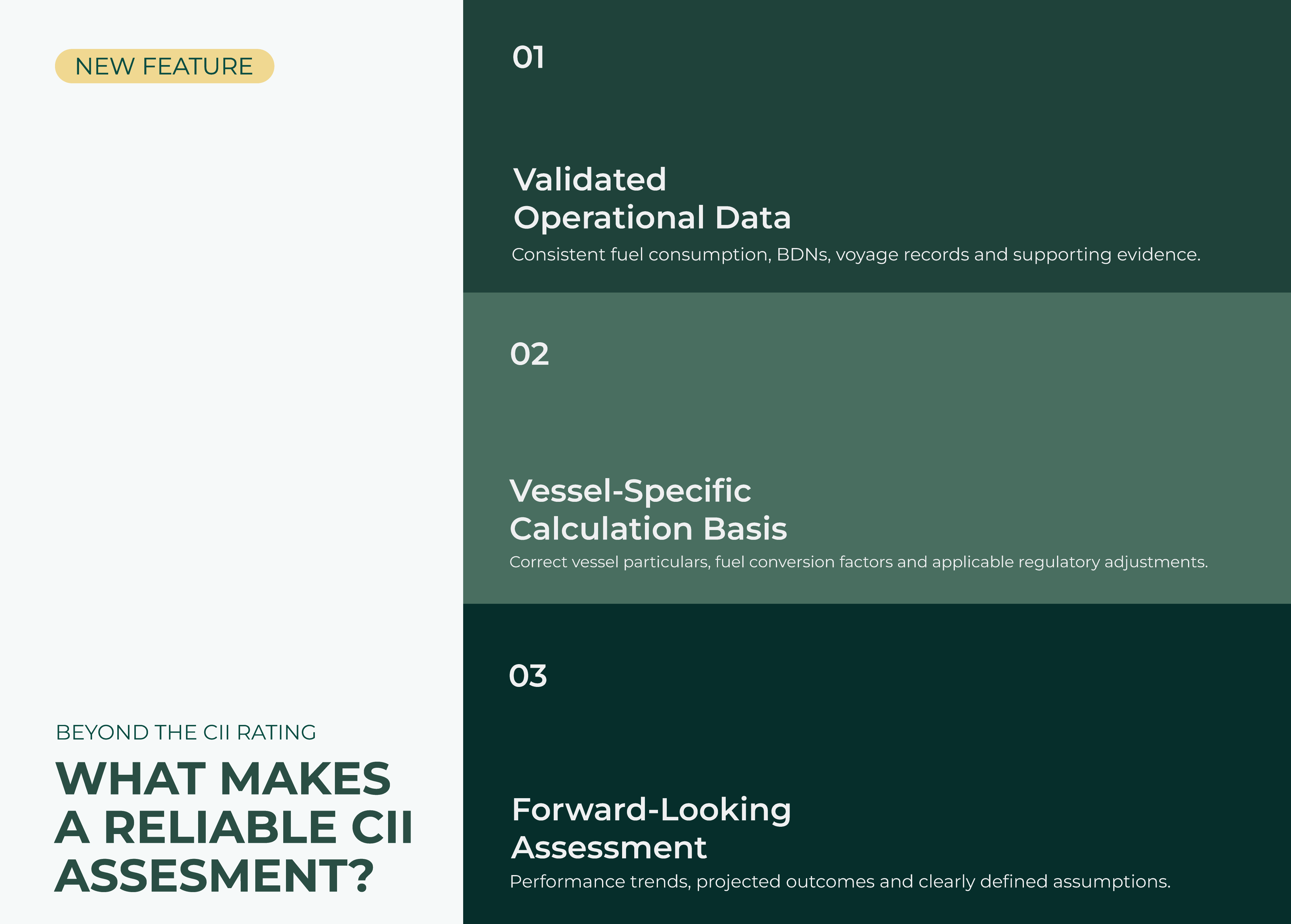
Taken together, these considerations highlight the importance of looking beyond the final CII rating. A reliable assessment should combine three key elements:
- Validated operational evidence: Fuel records, bunker documentation and voyage data should be reviewed for consistency, with discrepancies investigated.
- A vessel-specific calculation basis: Applicable ship characteristics, capacity measures, fuel factors, adjustments and regulatory requirements should be properly assessed.
- A transparent forward-looking outlook: Year-to-date performance should be complemented by an indicative year-end projection, with clear assumptions, reporting cut-offs and an understanding of its limitations.
Just as importantly, the process should provide traceability, making it possible to understand how the final figure was reached and what information supports it.
From CII calculations to informed decisions
As CII becomes increasingly relevant to fleet planning and compliance management, the focus should shift from simply calculating a rating to understanding the position behind it. Automated indicators remain valuable for frequent monitoring, but they need to be complemented by appropriate data validation, technical assessment and a clear view of potential year-end performance.
For shipowners, this means having access to a CII assessment that goes beyond the reported number: one that considers the evidence, reflects the individual vessel and provides meaningful context for decisions ahead.
Ultimately, a CII figure is only the starting point. Its real value lies in understanding what it represents, how reliable it is and what it means for the year ahead.

Related articles